

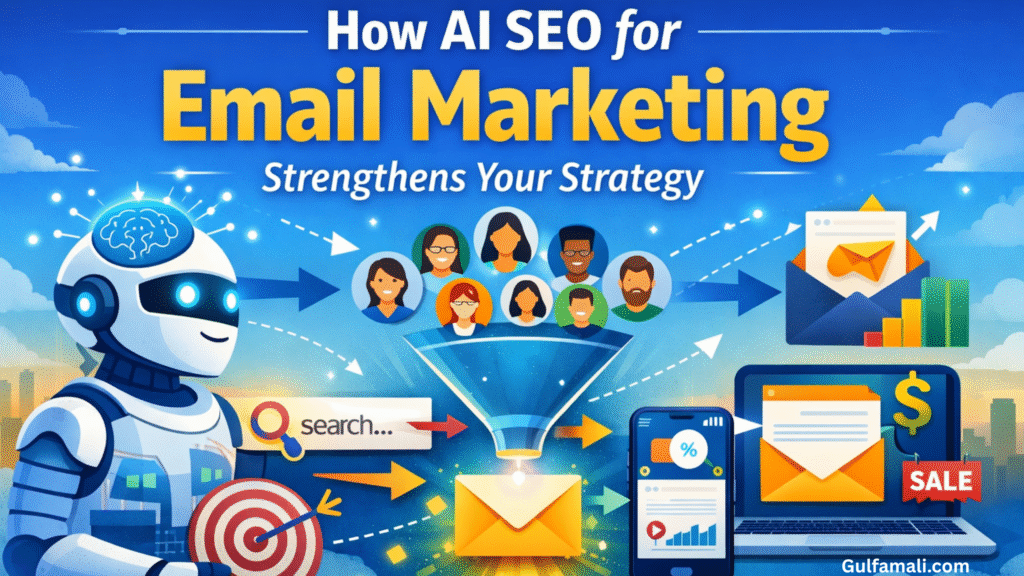
AI-driven search optimization now affects more than rankings. It directly shapes how well your email marketing performs. The quality of search visitors determines the quality of your subscribers.
This guide explains how to turn search traffic into engaged subscribers and customers using structured, data-driven integration.
Quick Answer
AI SEO for Email Marketing improves results by attracting high-intent visitors and using their search behavior to guide email targeting. Search queries, page interactions, and engagement signals help shape segmentation and email content. When search data informs email strategy, engagement increases, conversions improve, and the marketing funnel works more efficiently.
What is AI SEO for Email Marketing?
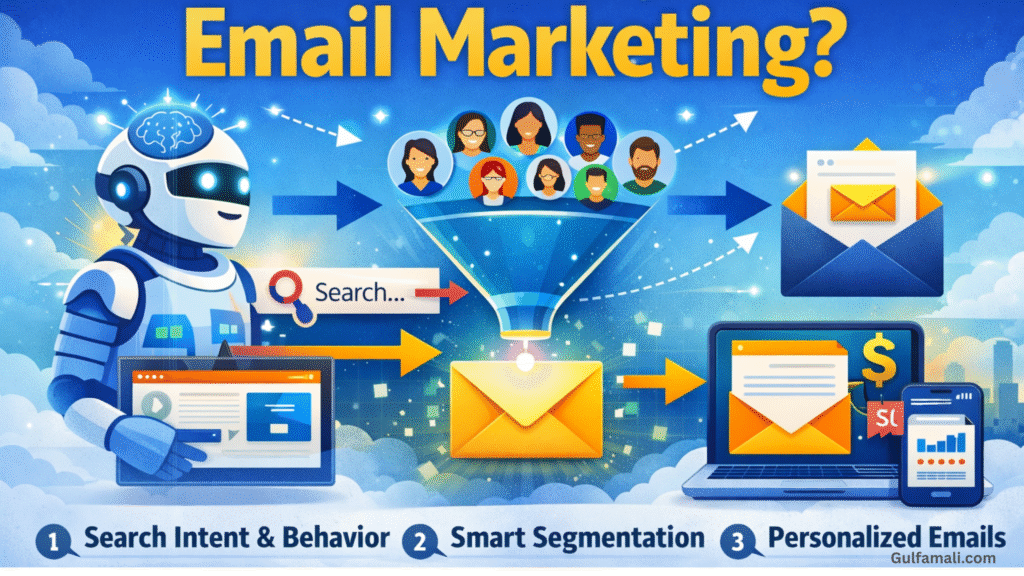
AI SEO for Email Marketing is the integration of search data and email systems. It uses search intent, on-site behavior, and engagement patterns to decide:
- Who should receive emails
- What type of content they need
- When they should receive it
Instead of treating SEO and email as separate channels, this approach connects them into one system.
The Core Model Behind This Strategy
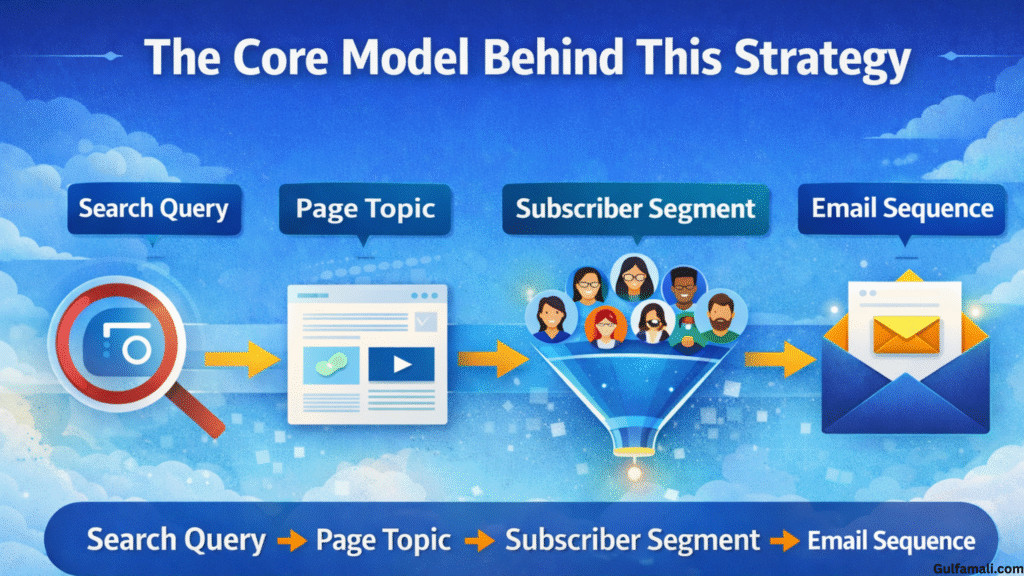
Search Query → Page Topic → Subscriber Segment → Email Sequence
A user’s search leads them to a focused page. Their behavior on that page signals their interest. They join a segment based on that interest. Then they receive emails aligned with their needs and stage.
This is the foundation of AI SEO strategy applied to email marketing.
How Does Search Intelligence Influence Email Performance?
Understanding visitor intent before they join your list
Search queries show what users want right now. If your content matches that intent, visitors arrive already aligned with your topic. These users are more likely to subscribe and engage later.
Intent-driven traffic improves lead quality.
Role of behavior tracking in identifying subscriber interests
User actions like clicks, scroll depth, and time spent reveal interests. This behavioral data helps predict what topics matter most to them.
Emails based on these patterns feel relevant, not random.
Why traffic relevance matters more than traffic volume
Large traffic numbers mean little without alignment. Focused visitors interact more, open emails more often, and move faster through the conversion funnel.
Relevance improves overall engagement metrics.
How Does AI Improve List Building from Organic Traffic?
Matching content topics with subscriber needs
AI content optimization helps align page topics with real audience problems. When readers see direct relevance, subscribing feels like a logical next step.
This supports stronger lead generation.
Smarter opt-in placement based on user engagement signals
AI detects where users pay attention most. Forms placed in high-engagement areas perform better than generic placements.
This improves opt-in efficiency.
Segmenting subscribers based on entry pages
The first page a user visits reveals their main interest. AI based audience segmentation groups subscribers accordingly.
Segmentation begins at the point of entry.
How Does AI Make Email Content More Effective?
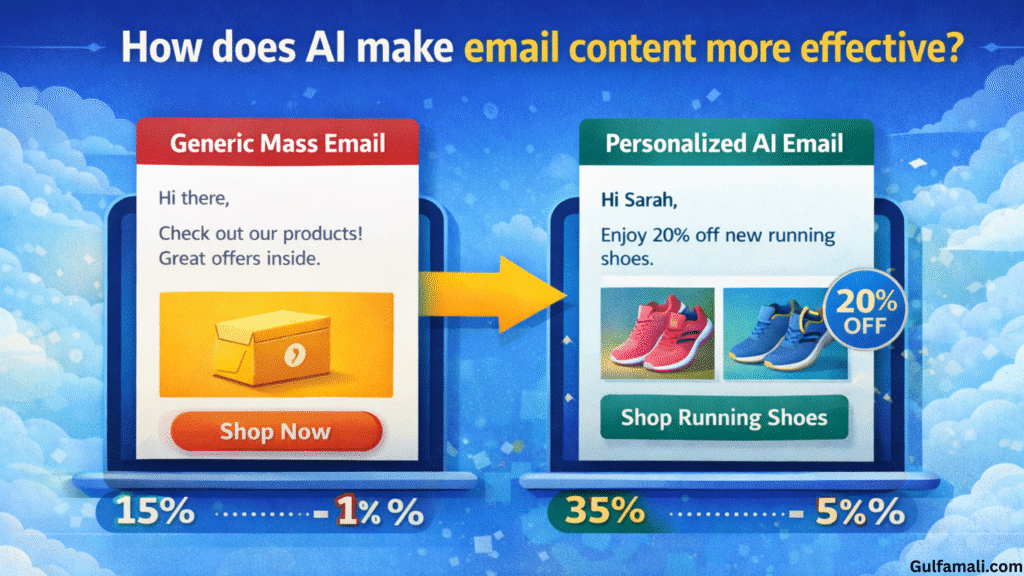
Personalization using behavioral data
AI in email marketing uses past interactions to adjust message content. Emails reflect what users have already shown interest in.
This builds content personalization naturally.
Optimizing subject lines with predictive insights
AI analyzes engagement patterns across campaigns. It identifies structures that improve open rates in specific segments.
This supports consistent improvement.
Creating dynamic content based on subscriber journey stage
Subscribers in the early stages need education. Later stages need comparison and decision support. AI helps adjust messaging accordingly.
This improves flow through the subscriber journey.
How do SEO insights help optimize the email funnel?
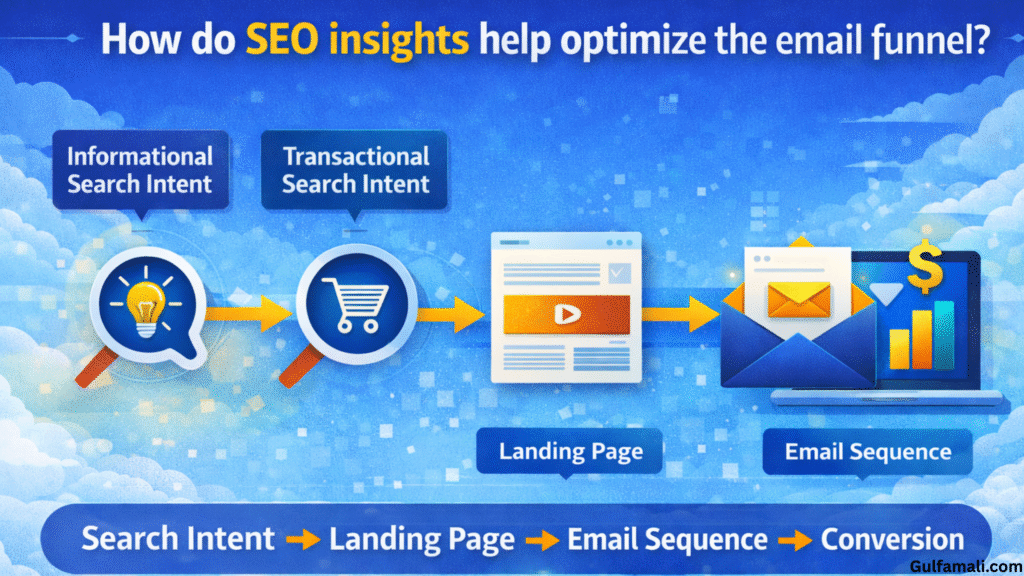
Connecting search queries to funnel stages
Informational queries match early funnel stages. Decision-focused queries match later stages. AI SEO strategy maps this automatically.
Email content then aligns with user readiness.
Aligning landing pages with email sequences
Landing page messaging should match follow-up emails. Consistency strengthens trust and reduces drop-off.
This creates a smooth conversion path.
Improving conversion paths using engagement metrics
AI analytics for email marketing tracks opens, clicks, and on-site actions. These signals show where users lose interest.
Refinement becomes ongoing, not occasional.
How Does Automation Connect Search Data with Email Systems?
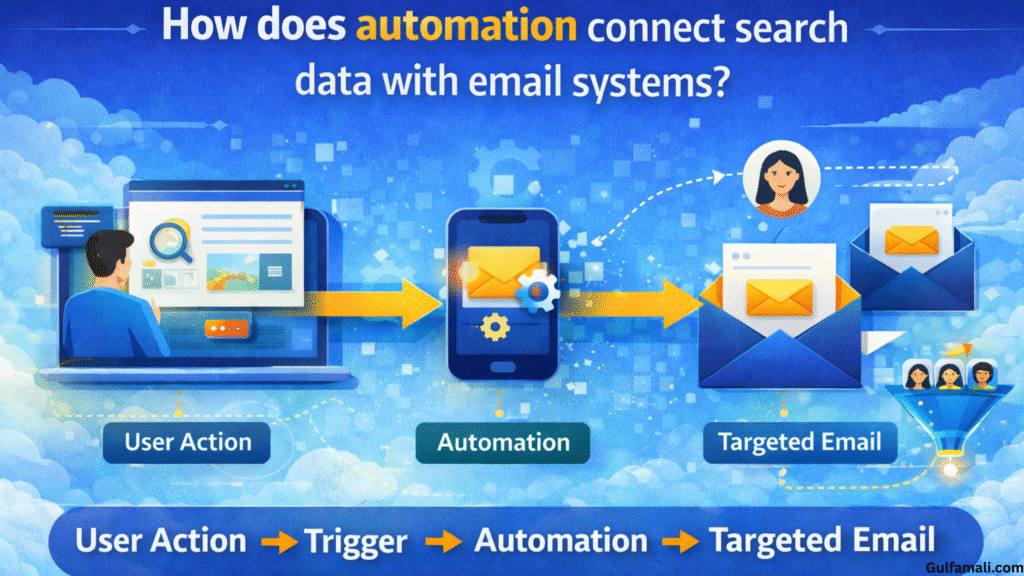
Triggered emails based on content interaction
Users who engage with certain topics can receive related follow-up emails. This connects search behavior directly to communication.
Timing becomes behavior-based.
Automated workflows for lead nurturing
Email marketing automation with AI adjusts sequences depending on user actions. Messages change based on engagement, not fixed schedules.
This supports flexible lead nurturing.
Using analytics to refine targeting over time
AI learns from behavioral data analysis. Segments, timing, and content improve gradually.
This creates a stronger retention strategy.
Step-by-Step Framework to Connect Search Traffic with Email Results
- Identify high-intent search topics.
- Create focused content aligned with those needs.
- Add opt-in offers that match each topic.
- Track user engagement on pages.
- Segment subscribers based on content consumed.
- Send personalized email sequences.
- Monitor performance and refine targeting.
Real-World Use Cases
Blog content turning readers into segmented subscribers
A marketing blog segments readers by beginner vs advanced topics. Each group receives different email paths.
This improves relevance and retention.
Niche site using topic clusters to drive lead nurturing
A niche site aligns each topic cluster with a dedicated email series. AI driven lead generation becomes more structured.
Users receive guidance step by step.
Service business aligning search pages with email sequences
Service pages focused on specific problems trigger tailored email follow-ups. Messaging stays aligned with the original need.
Consistency builds trust.
Common Mistakes That Reduce Results
Focusing only on traffic volume instead of intent.
Fix: Target specific problems, not broad keywords.
Sending the same emails to all subscribers.
Fix: Group subscribers by topic and engagement.
Ignoring behavior signals after sign-up.
Fix: Use clicks and page visits to guide content.
Not aligning landing pages with email content.
Fix: Keep messaging consistent across both.
Weak segmentation.
Fix: Start segmentation from entry pages.
No tracking of engagement metrics.
Fix: Monitor opens, clicks, and behavior regularly.
Treating search and email as separate systems.
Fix: Use search data to shape email strategy.
Comparison: Traditional SEO + Email vs AI-Driven Integration
| Aspect | Traditional Approach | AI-Enhanced Approach |
| Targeting | Broad keywords | Intent-based targeting |
| Segmentation | Manual lists | Behavior-based segments |
| Content | Static emails | Dynamic, personalized content |
| Funnel optimization | Periodic updates | Continuous data-driven refinement |
| Data usage | Limited campaign data | Continuous behavioral data |
FAQ
How does search intent affect email marketing performance?
It shows what users want, which helps tailor email content.
Can AI help improve email open and click rates?
Yes, by improving personalization, timing, and content relevance.
How do you turn blog traffic into email subscribers effectively?
Use topic-matched opt-ins and segment users by interests.
Is automation necessary for connecting SEO with email?
It helps scale and respond to user behavior efficiently.
How does personalization improve conversion rates?
Relevant messages keep users engaged through the customer lifecycle.
What data should be tracked for better segmentation?
Page visits, clicks, downloads, and email interactions.
Does this strategy work for small businesses?
Yes, even basic segmentation improves performance over time.
How long does it take to see results?
Results improve gradually as more data is collected.
Conclusion
AI SEO for Email Marketing works best when search intent, user behavior, and email personalization operate together. AI helps understand users, segment audiences, and deliver relevant communication. This integration turns search visitors into qualified leads and long-term customers. A connected, data-driven system supports steady growth.
You can also use these expert-level email marketing templates to structure intent-based email sequences.
About the Author
Gulfam Ali is an SEO specialist with over 7 years of experience in search engine optimization, with a strong focus on Technical SEO and organic growth. He has worked with businesses across multiple industries, managing SEO projects for clients in different countries and helping them improve Google rankings, increase organic traffic, and achieve sustainable growth.
His work includes contributions to international platforms, reflecting a strong understanding of high-quality content and SEO best practices. As the founder of GulfamAli.com, he helps businesses worldwide grow through structured SEO strategies, ethical practices, and performance-driven results.