

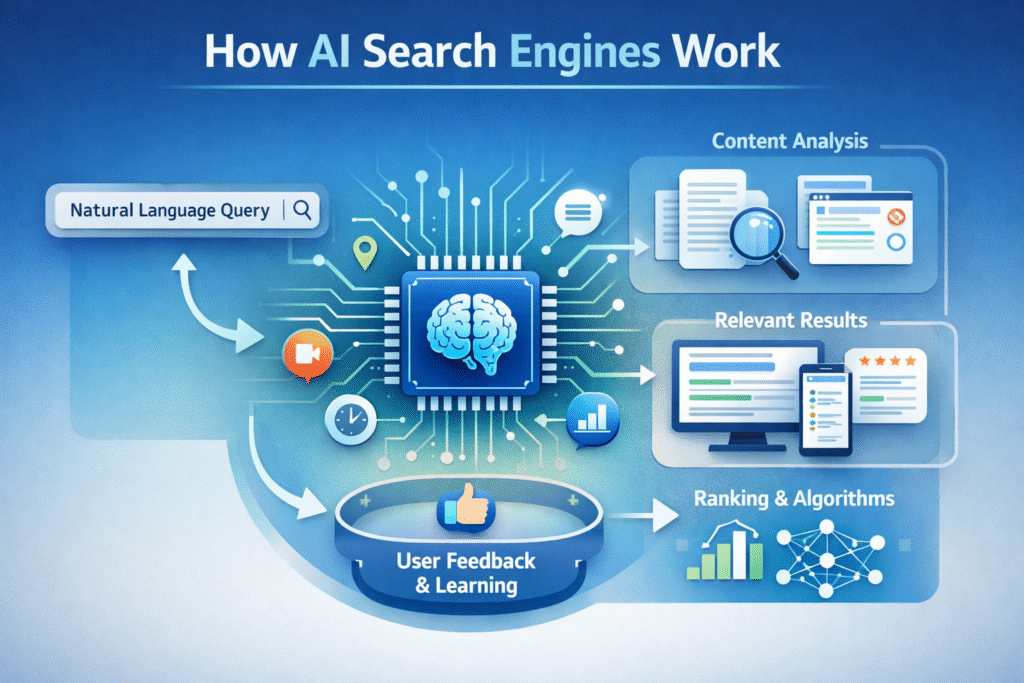
AI search engines do not rely only on matching keywords. They try to understand meaning.
This guide explains how AI search engines work, how they interpret queries, and how results are ranked.
Each step is explained clearly, without technical overload.
Quick Answer: How AI Search Engines Work
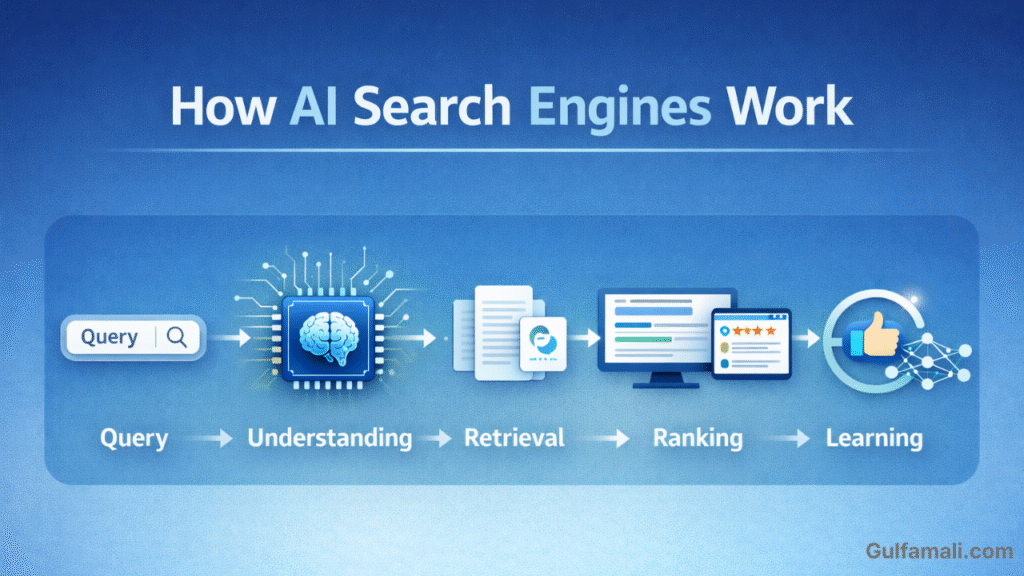
AI search engines analyze the meaning behind a user’s query instead of focusing only on words. They evaluate intent, context, and past patterns, then retrieve and rank content using learning models. Over time, feedback and interaction data help these systems improve accuracy, relevance, and usefulness.
What Makes AI Search Engines Different From Traditional Search
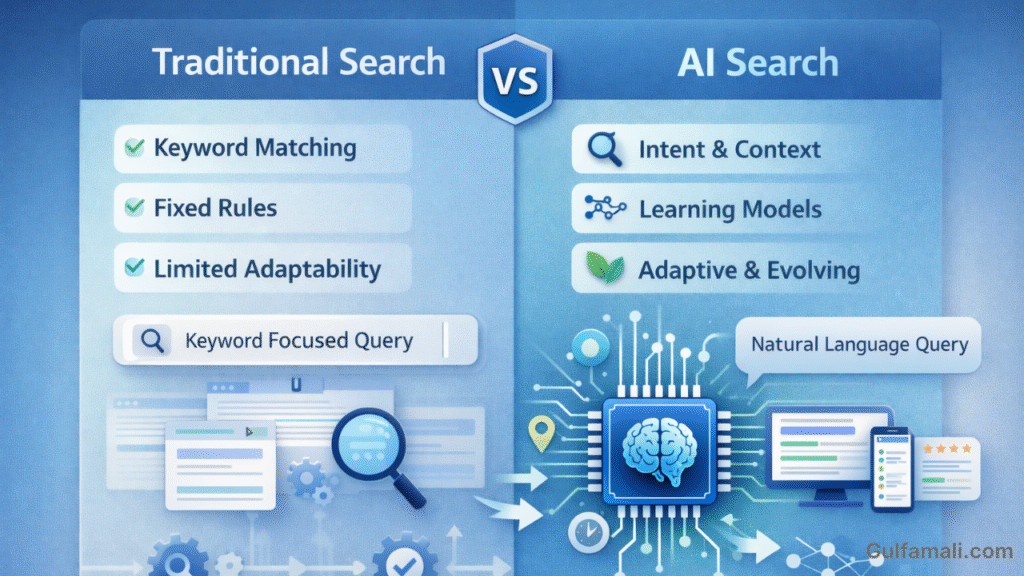
Traditional search systems depended heavily on exact keyword matching.
Modern AI-driven search systems go beyond this by focusing on understanding meaning and context.
From keyword matching to intent understanding
Older systems searched for the same words on a page.
Modern AI systems focus on what the user wants to achieve, not just what they typed.
Role of intelligent search systems in modern results
Intelligent search systems analyze relationships between concepts.
This allows AI-driven search results to feel more accurate and helpful.
How AI Search Engines Understand Search Queries
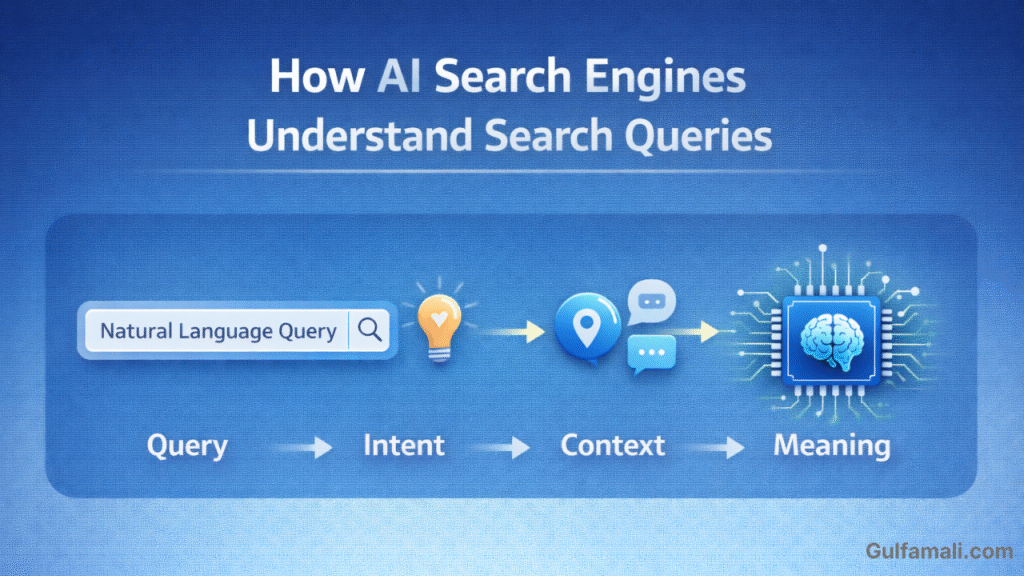
AI search engines explained simply: they read queries more like humans do.
Query interpretation and natural language queries
AI breaks queries into meaning units rather than isolated words.
This makes natural language queries easier to process.
How AI detects user intent and context
AI evaluates wording, structure, and common user search behavior.
This helps identify intent and context behind each query.
Handling conversational and complex searches
Conversational searches often include follow-ups or implied meaning.
AI systems carry context forward to adjust results correctly.
How AI Search Engines Process Information
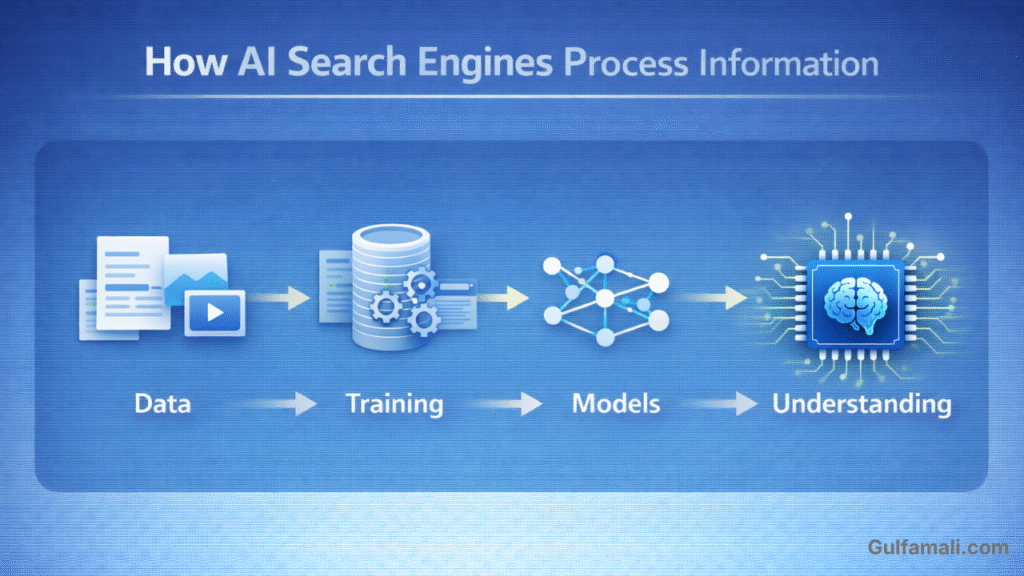
Collecting and organizing data
Search systems collect data from many sources.
The goal is efficient information retrieval with high accuracy.
Using training data and learning patterns
Machine learning models learn from training data.
These learning patterns help predict relevance.
Applying search engine algorithms for understanding
AI algorithms analyze structure, relationships, and meaning.
This improves semantic search and result accuracy.
How AI Search Engines Rank Results
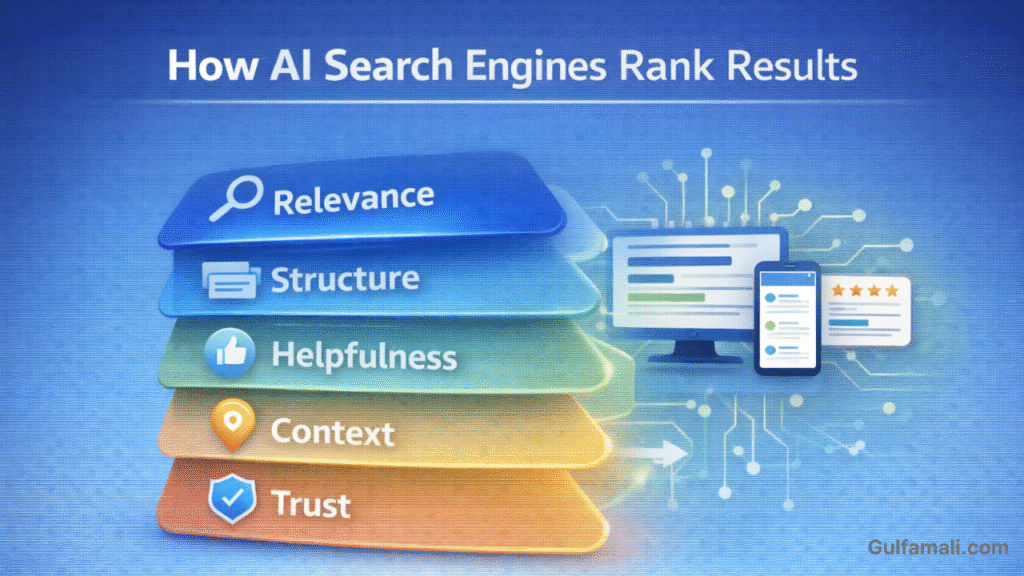
Content relevance and semantic search
AI evaluates how well content answers the query.
Semantic search focuses on meaning rather than exact wording.
Ranking signals beyond links and keywords
Modern ranking signals include clarity, usefulness, and structure.
These signals help improve overall search quality.
This is similar to how Google AI Overviews select sources by evaluating relevance, structure, and overall usefulness.
Personalized and contextual search results
Context such as location and behavior influences rankings.
This creates more personalized search results.
Step-by-Step: How AI Search Engines Work
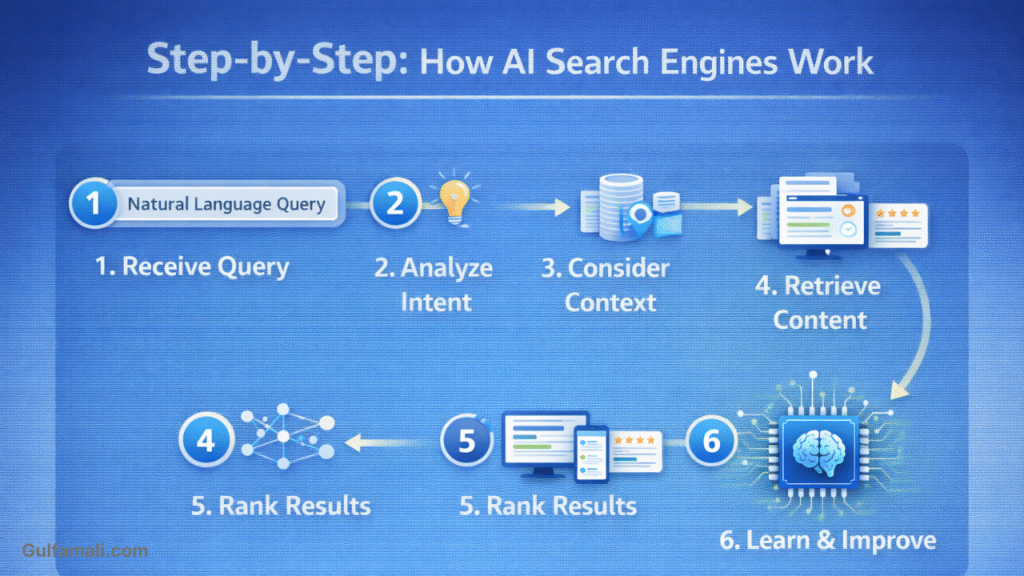
- User enters a natural language query
Query may be short, detailed, or conversational. - AI interprets meaning and intent
The system identifies what the user is trying to achieve. - Context and past behavior are analyzed
Location, history, and patterns help to refine results. - Relevant content is retrieved
Pages are selected based on usefulness and relevance. - Results are ranked using AI models
Machine learning predicts the most helpful answers. - Feedback improves future results
User interactions help the system learn over time.
Role of Machine Learning and NLP in AI Search
Machine learning models in search engines
Machine learning in search engines improves relevance prediction.
Decisions are driven by data, not fixed rules.
Natural language processing in search understanding
Natural language processing helps AI understand grammar and meaning.
This improves handling of complex queries.
Continuous learning systems and result improvement
AI systems learn from user interactions.
This improves result quality over time.
Real-World Examples of AI-Powered Search Engines
- Informational searches
AI provides structured, summarized answers instead of long lists of links.
- Conversational queries
Follow-up questions are understood because context is carried forward.
- Personalized results scenarios
Results may vary based on user history, location, or preferences.
- Context-based result changes
Timing, device, or location can influence which results appear.
Common Mistakes People Make When Explaining AI Search
- Treating AI search as keyword-based
- Ignoring intent-based search behavior
- Confusing AI search with SEO tools
- Oversimplifying machine learning concepts
- Assuming AI replaces ranking signals completely
- Mixing marketing language with education
- Assuming AI “thinks” like humans, when it actually recognizes patterns and probabilities at scale rather than reasoning
AI Search vs Traditional Search
How traditional search works
Traditional search relies on fixed rules and exact matches.
It struggles with ambiguous queries.
How AI-based search engines differ
AI search adapts using context and learning.
It focuses on meaning and helpful results.
Key practical differences for users
AI search feels more natural and accurate.
Traditional search feels more rigid.
How AI Search Engines Affect SEO and Content
Why content clarity matters more than keywords
Clear content helps AI extract answers faster.
From hands-on SEO audits and real content optimization work, pages with clearer structure and intent alignment are consistently easier for AI-driven search systems to interpret and surface.
This shift reflects how AI SEO works in practice, where content is designed around meaning, structure, and intent instead of keyword repetition.
Importance of structure and helpful results
Well-structured content improves understanding.
Helpful results build long-term trust.
Trustworthy sources and user satisfaction
AI favors trustworthy sources over time.
User satisfaction is a strong quality signal.
Google has explained that its search systems are designed to evaluate content usefulness and quality, as outlined in official guidance from Google Search Central.
Frequently Asked Questions About How AI Search Engines Work
How do AI search engines work step by step?
They interpret intent, retrieve data, rank results, and learn from feedback.
How does AI understand user intent in search?
By analyzing language, patterns, and context.
Are AI search engines replacing Google?
No. Google uses AI within its search systems.
What is the difference between AI search and Google search?
AI search focuses on meaning, and Google integrates AI to improve results.
How does machine learning improve search results?
It helps predict relevance and adjust rankings over time.
Do AI search engines personalize results?
Yes, based on context and behavior.
Is AI search based on keywords or meaning?
Primarily meaning, with keywords as support.
How accurate are AI-driven search results?
Accuracy improves as systems learn continuously.
Conclusion
AI search engines focus on meaning, intent, and context. Understanding how AI search engines work explains modern search behavior clearly. This knowledge helps align content with how search actually works today.
About the Author
Gulfam Ali is an SEO specialist with over 7 years of experience in search engine optimization, with a strong focus on Technical SEO and organic growth. He has worked with businesses across multiple industries, managing SEO projects for clients in different countries and helping them improve Google rankings, increase organic traffic, and achieve sustainable growth.
His work includes contributions to international platforms, reflecting a strong understanding of high-quality content and SEO best practices. As the founder of GulfamAli.com, he helps businesses worldwide grow through structured SEO strategies, ethical practices, and performance-driven results.