

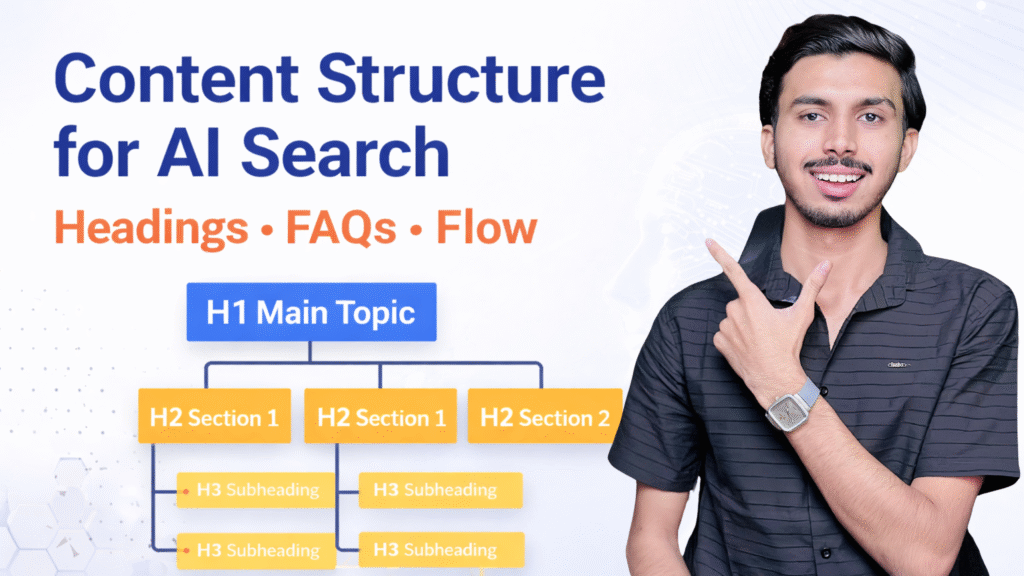
Modern search engines no longer rely only on keywords. AI systems now analyze how information is organized, explained, and connected within a page.
Because of this shift, the content structure for AI search has become an important part of modern SEO. Articles with clear headings, logical sections, and structured explanations are easier for AI systems to interpret.
In this guide, you will learn how to structure content using headings, logical flow, and FAQ sections so both readers and AI-powered search engines can understand the topic clearly.
Quick Answer: What Is Content Structure for AI Search?
Content structure for AI search means organizing an article with clear headings, logical sections, and structured explanations so AI systems can understand the topic easily.
This usually includes proper heading hierarchy, logical content flow, readable formatting, and FAQ sections that answer common questions. A well-structured article improves clarity, helps search engines interpret context, and increases the chance of appearing in AI-generated search results.
Why Content Structure Matters for AI Search Engines
How AI Systems Interpret Content Hierarchy
AI-powered search engines analyze the structure of a page to understand the topic and supporting information.
Headings act as signals that show how ideas relate to each other. A clear content hierarchy for SEO helps search engines identify the main subject and its supporting sections.
When headings are structured properly, AI systems can easily determine:
- The primary topic
- Supporting explanations
- Relationships between sections
Understanding how AI understands content structure is now a fundamental part of modern SEO.
The Role of Clarity and Readability in AI Understanding
Clear structure improves both readability and search interpretation.
Short paragraphs, structured sections, and simple explanations make it easier for search engines to extract meaning.
Improving content readability for SEO also benefits users because information becomes easier to scan and understand.
Google itself recommends creating structured, helpful content in its official documentation
How Structured Content Improves Search Visibility
Well-structured articles are easier for search engines to analyze and summarize.
This increases the chances of appearing in:
- Featured snippets
- AI summaries
- Question-based search results
- Knowledge panels
Clear structure also strengthens overall AI search optimization because search engines can interpret the topic with greater accuracy.
Core Elements of an Effective Content Structure for AI Search
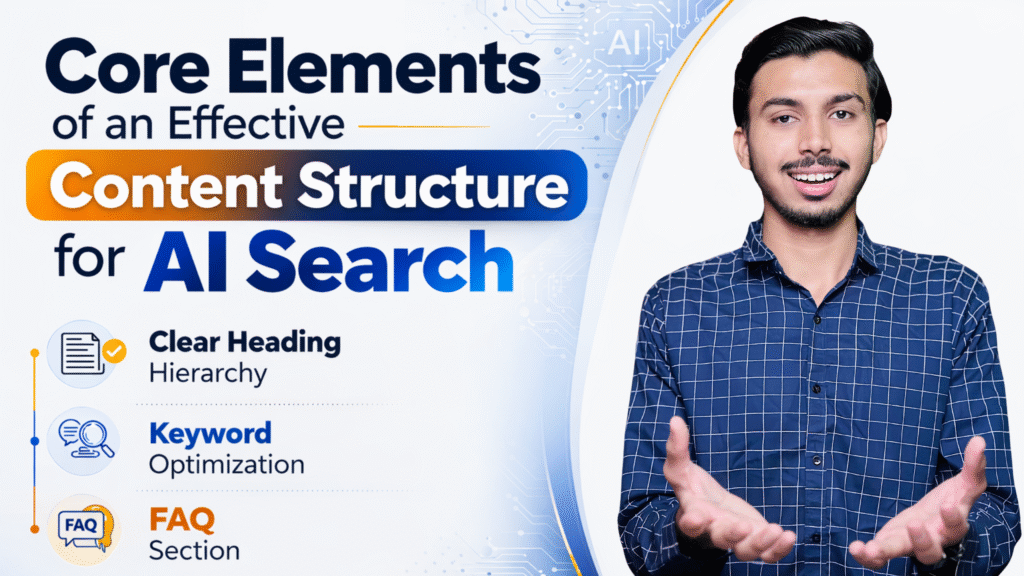
Clear Heading Hierarchy (H1 → H2 → H3)
Headings create the backbone of structured content.
A typical SEO heading structure looks like this:
H1: Main topic of the article
H2: Major sections explaining the topic
H3: Supporting explanations within each section
This structure helps search engines understand how information is organized.
You can see a practical example of structured writing in this guide about
AI-friendly content that gets quoted by search engines.
Logical Content Flow for Articles
Articles should move from basic ideas to deeper explanations.
A logical content flow for SEO helps readers understand the topic step by step.
A common flow includes:
Introduction
Definition
Core explanations
Practical framework
Examples
FAQs
Conclusion
Maintaining a clear logical content flow for articles prevents confusion and improves topic clarity.
Structured FAQs That Answer Real User Questions
FAQ sections help search engines identify common user queries.
A well-organized FAQ structure for SEO allows AI systems to match content with real search questions.
FAQ sections also increase topical completeness because they address related questions that may not appear in the main content.
Many websites fail to appear in AI answers because they ignore structured questions. This issue is explained in the article about
why some websites never appear in AI answers.
Clean Formatting and Content Layout
Content formatting strongly affects readability.
Effective SEO content formatting includes:
- Short paragraphs
- Bullet points
- Clear section breaks
- Consistent heading patterns
These formatting practices improve content organization for better SEO and make articles easier to scan.
How to Structure Content for AI Search Step by Step
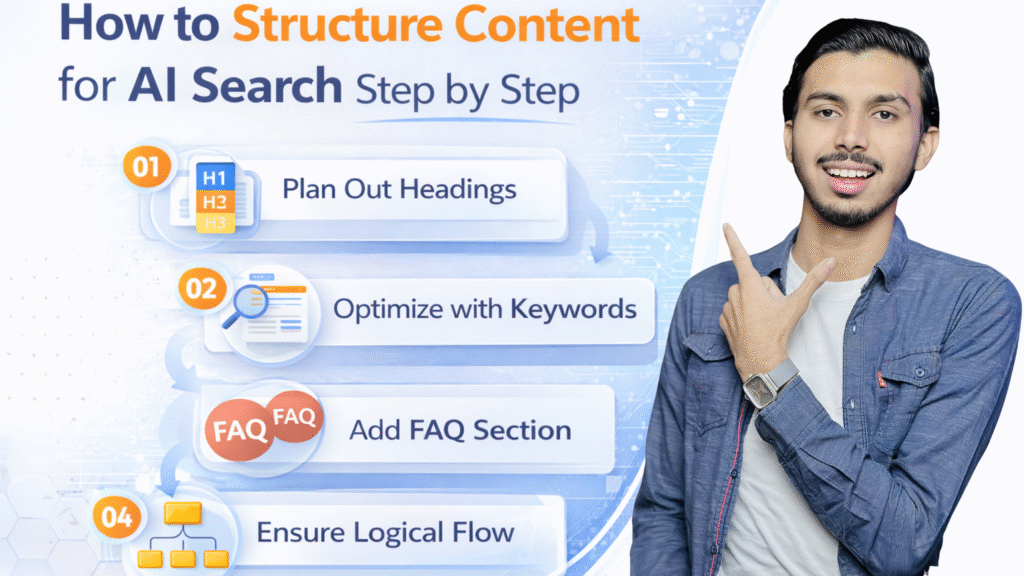
Step 1: Define the Main Topic and Search Intent
Before writing, define the main topic the article will explain.
Identify:
- The user problem
- The search intent
- The main question the article answers
This approach helps create a focused blog post structure for better ranking.
Step 2: Create a Clear Heading Structure
Break the article into logical sections using headings.
Each section should explain a specific part of the topic.
This method improves structured content writing and keeps ideas organized.
Step 3: Maintain Logical Content Flow
Each section should connect naturally to the next.
Avoid sudden topic shifts or unrelated explanations.
Maintaining clear transitions supports SEO content layout best practices.
Step 4: Add Structured FAQ Sections
FAQ sections help answer additional questions users may search for.
Understanding how to add FAQs for SEO improves both user experience and search visibility.
FAQ sections also provide clear answers that AI systems can quote.
Step 5: Optimize Formatting for Readability
Formatting improves both readability and search interpretation.
Use:
- Short paragraphs
- Numbered steps
- Bullet lists
These techniques improve content readability for SEO and make information easier to process.
Example of a Well-Structured Article for AI Search
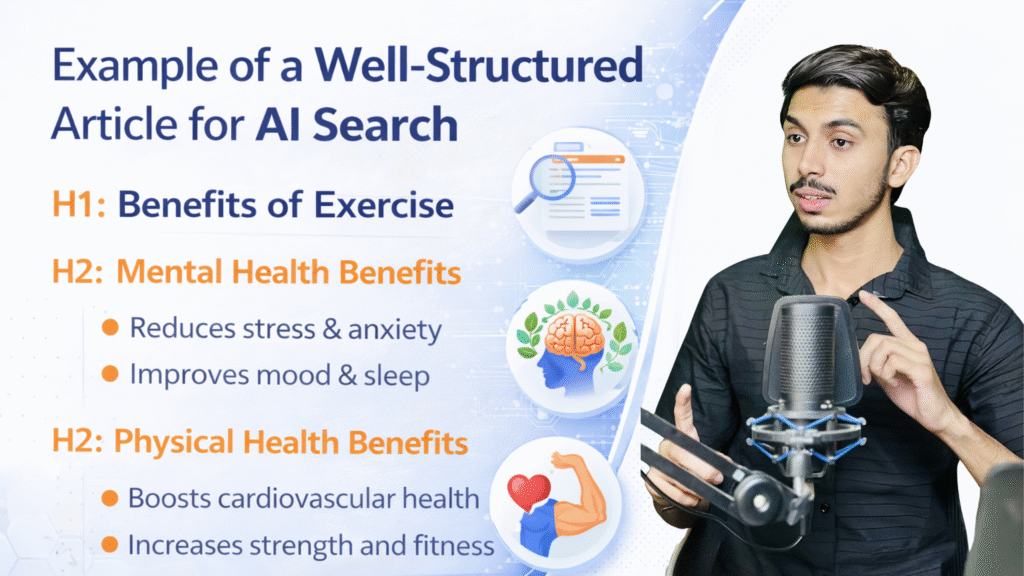
Example Blog Structure
A well-organized article usually follows this structure:
H1: Main topic
Introduction: Explain the topic
Definition: Provide a quick explanation
H2 sections: Core explanations
H3 sections: Supporting details
FAQ section: Answer related questions
Conclusion: Summarize the topic
This layout represents a strong AI SEO content structure.
Why This Structure Works
This structure works because it creates clarity.
Search engines can easily identify:
- The main topic
- Supporting explanations
- Relationships between sections
It also follows common AI search engine optimization techniques used in modern SEO.
Content Structure Best Practices for AI-Friendly Articles
Keep Topic Hierarchy Clear
Avoid mixing unrelated topics in one article.
Clear hierarchy improves both readability and search interpretation.
Use Question-Based Headings
Many search queries are phrased as questions.
Using question-based headings helps match real user searches.
Maintain Consistent Formatting
Consistent formatting improves clarity.
Predictable structure helps search engines understand the article faster.
Focus on Clarity Rather Than Complexity
Simple explanations work best.
AI systems prioritize clear information over complex language.
Common Content Structure Mistakes That Hurt AI Search Visibility
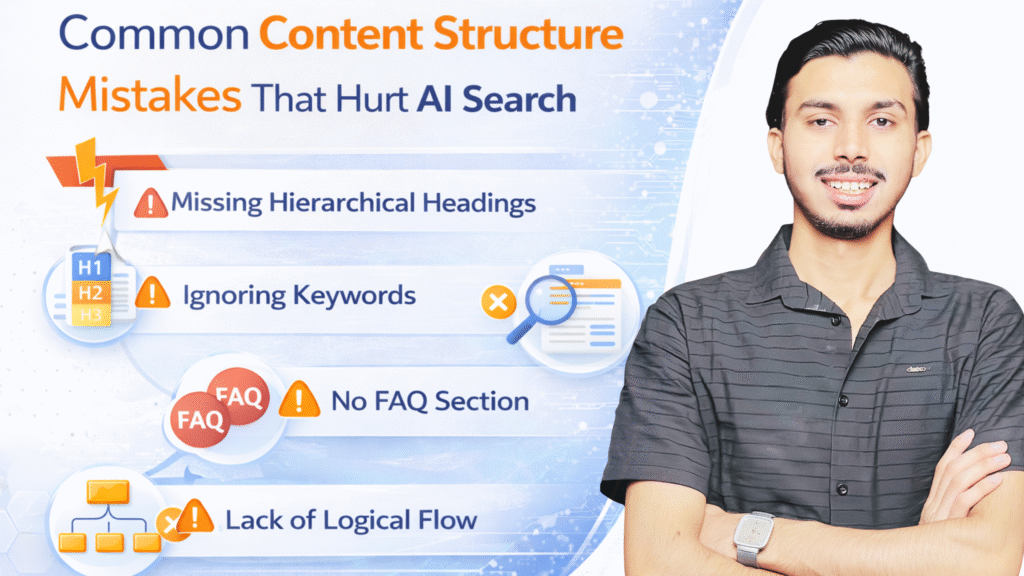
Inconsistent heading hierarchy
Skipping heading levels breaks the logical structure of the article.
Long unstructured paragraphs
Large blocks of text reduce readability and clarity.
Poor content flow
Disconnected sections confuse readers and search engines.
Unnecessary sections
Extra sections dilute the main topic.
Keyword stuffing in headings
Overusing keywords harms readability and makes headings unnatural.
Missing FAQ sections
FAQ sections help answer additional user queries and improve topical coverage.
Mixing multiple search intents
Combining different search intents in one article confuses search engines.
Traditional SEO Structure vs AI-Focused Content Structure
Traditional SEO Structure
Traditional SEO often focused heavily on keyword placement.
This sometimes resulted in articles written primarily for search engines.
AI-Friendly Content Structure
Modern SEO prioritizes structure, clarity, and explanation.
Content is organized so both humans and AI systems can understand it easily.
Key Differences
The main difference is interpretation.
AI-focused structure emphasizes context, logical organization, and meaningful explanations.
This approach supports better AI search engine optimization strategies.
Frequently Asked Questions
What is the best content structure for AI search?
The best structure includes clear headings, logical flow, short paragraphs, and FAQ sections that answer real user questions.
How do headings help AI understand content?
Headings create a hierarchy that signals the main topic and supporting sections.
Why are FAQs important for AI-friendly articles?
FAQs match common user questions and help search engines extract clear answers.
How long should sections be in a well-structured article?
Most sections should contain short paragraphs of two to four lines.
Does content flow affect SEO rankings?
Yes. Logical flow improves both readability and search engine interpretation.
What is the ideal heading hierarchy for blog posts?
A typical structure is H1 for the main topic, H2 for major sections, and H3 for supporting explanations.
Can structured content improve AI search visibility?
Yes. Clear structure helps search engines extract information and display it in summaries or answer boxes.
How do AI systems analyze article structure?
AI systems analyze headings, paragraphs, and topic relationships to understand the meaning of the content.
Quick Content Structure Checklist
Before publishing an article, check the following:
✔ Clear H1 topic
✔ Logical H2 sections
✔ Supporting H3 explanations
✔ Short readable paragraphs
✔ Structured FAQ section
✔ Consistent formatting
Conclusion
Clear structure is essential for modern SEO. Articles with organized headings, logical flow, and structured explanations are easier for both readers and AI systems to understand.
A well-designed content structure for AI search improves readability, strengthens topical clarity, and helps search engines interpret the meaning of the content more effectively.
As AI continues shaping search results, structured content will remain a key factor in successful SEO strategies.
About the Author
Gulfam Ali is an SEO specialist with over 7 years of experience in search engine optimization, with a strong focus on Technical SEO and organic growth. He has worked with businesses across multiple industries, managing SEO projects for clients in different countries and helping them improve Google rankings, increase organic traffic, and achieve sustainable growth.
His work includes contributions to international platforms, reflecting a strong understanding of high-quality content and SEO best practices. As the founder of GulfamAli.com, he helps businesses worldwide grow through structured SEO strategies, ethical practices, and performance-driven results.