
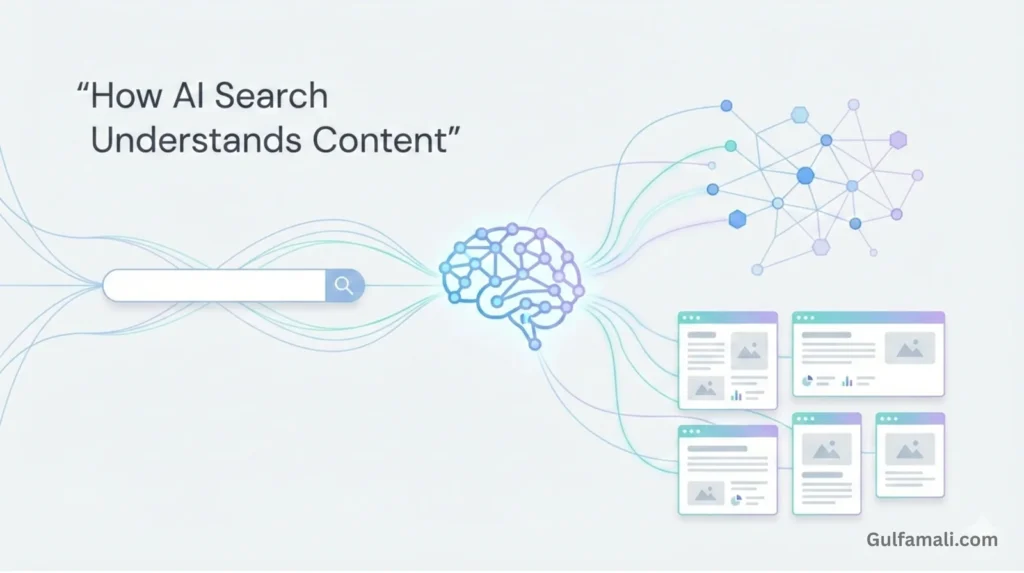
AI SEO is how modern search engines use artificial intelligence to understand what content means, what users want, and whether a page is genuinely helpful.
Search is no longer about matching the same words. It is about intent, context, and usefulness.
In this guide, you’ll learn how AI-driven search works, how it differs from traditional SEO, and what actually matters if you want your content to rank and last.
Quick Answer: What Is AI SEO?
AI SEO is the practice of optimizing content for search engines that use artificial intelligence to interpret meaning, intent, and quality. Instead of relying only on keywords and fixed rules, modern systems use machine learning to understand queries, evaluate usefulness, and rank results based on satisfaction.
The focus shifts away from technical tricks and toward clarity, relevance, and real value.
What Is AI SEO and Why It Exists
How SEO evolved from keywords to understanding intent
Early SEO rewarded pages that repeated exact keywords, even when they didn’t solve real problems. Over time, this created poor search results and frustrated users.
Search engines moved toward understanding what people actually want, not just what they type.
Why search engines needed AI to scale results quality
Billions of searches happen every day, and manual rules can’t scale at that level. AI allows search engines to learn from large patterns in data and improve results automatically.
This is how modern search adapts to new topics, language changes, and shifting user behavior.
Difference between traditional SEO and AI-powered optimization
Traditional SEO emphasizes fixed rules like placement and density. AI-powered optimization focuses on meaning, context, and whether users are satisfied.
The goal is no longer to game rankings, but to meet intent clearly.
How AI Search Works (Simple High-Level Explanation)
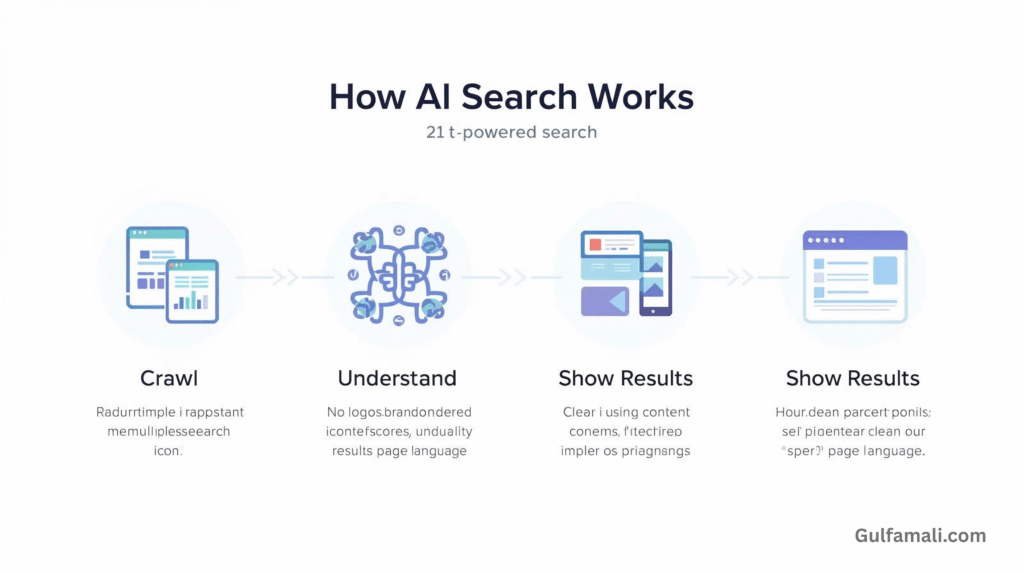
Crawling and indexing in an AI-driven system
Search engines still crawl pages and store them in an index. The difference lies in how content is analyzed after crawling.
AI models help classify topics, intent, and relationships during indexing.
How machine learning interprets queries
When someone searches, AI looks beyond the exact words. It analyzes past patterns and behavior to infer intent. Google has explained that modern search systems use machine learning to interpret queries and match them with content based on meaning, not just words.
This helps match queries with pages that answer the real question.
How relevance is determined beyond exact keywords
Relevance is based on meaning rather than repetition. AI checks whether a page covers the topic clearly and completely.
Pages can rank even without exact-match phrases if intent is satisfied.
How AI Understands Content
Semantic understanding and topic relationships
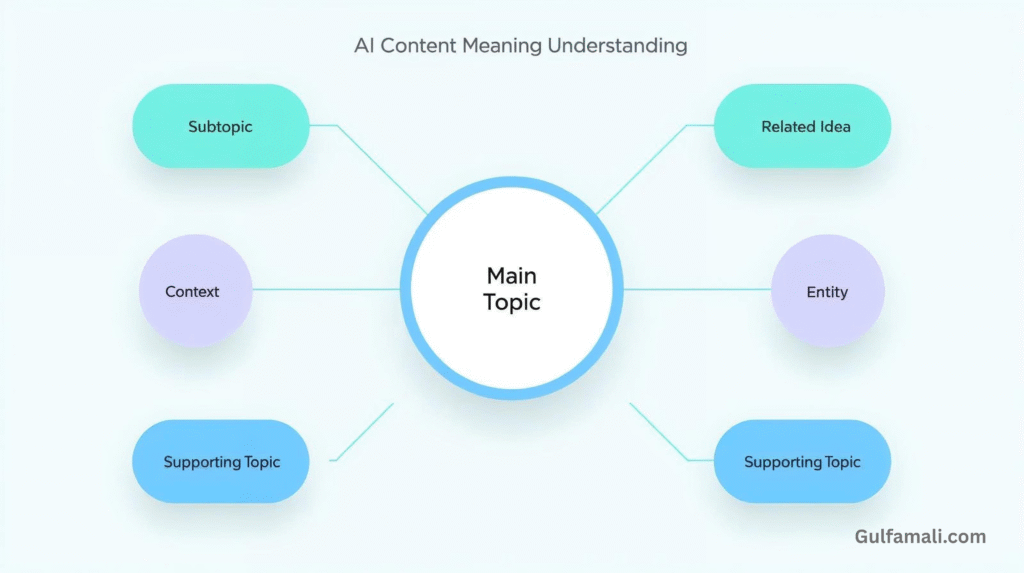
AI breaks content into concepts and topics and looks at how ideas connect. This allows systems to understand the overall subject instead of isolated phrases. Google’s documentation shows that search systems analyze topics, entities, and relationships to understand what a page is really about.
Entities, context, and meaning
Entities include people, brands, places, and core concepts. AI connects these entities with broader context to interpret what the content is actually about.
Why structure and clarity matter more than repetition
Clear headings and logical flow help both readers and AI systems. Keyword repetition without structure adds little value.
How Google AI Ranks Content Today
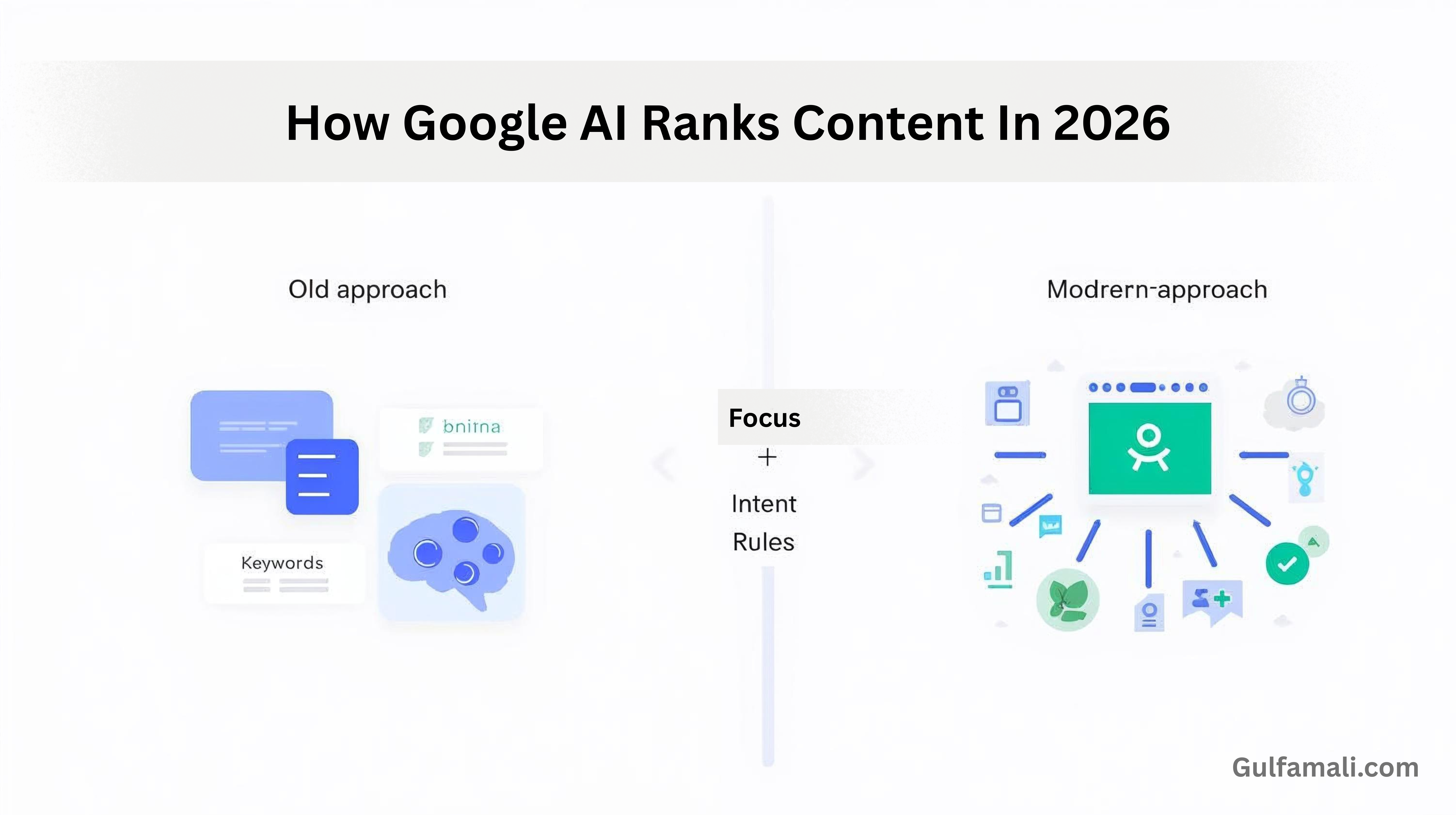
Search intent matching vs keyword matching
Modern ranking systems prioritize intent matching over exact wording. Content that answers the question directly tends to perform better.
Content usefulness and satisfaction signals
Search engines observe how users interact with results over time. Engagement, return behavior, and satisfaction patterns influence rankings.
Role of experience, expertise, and topical depth
AI evaluates whether content shows real understanding. Depth and accuracy matter more than surface-level summaries.
Topical authority helps content stay relevant longer.
How AI Affects SEO in Real Practice
Changes in keyword research
Keyword research becomes topic research. Related questions and supporting subtopics matter more than one main phrase.
Understanding intent is more important than exact wording.
Impact on content length, depth, and formatting
There is no ideal word count. Content should be as long as needed to explain clearly.
Good formatting helps readers and AI follow the explanation.
Why thin and generic content fails faster
Generic content adds little value. AI systems are better at detecting shallow coverage and overlap.
Thin pages lose visibility faster than before.
AI SEO for Beginners: What Actually Matters Today
Writing for humans first
Content should be easy to read and understand. When users benefit, AI systems usually follow.
Structuring for understanding
Headings should reflect real questions, not tricks. Clear structure improves comprehension.
When AI tools help and when they hurt
AI tools can assist with drafts and research, but they cannot replace judgment. Unedited AI text often lacks depth and accuracy.
Practical AI SEO Framework
This framework aligns content with how AI-driven search systems evaluate pages.
- Identify the real intent behind the query
- Define the main topic and supporting subtopics
- Create a clear structure with logical headings
- Answer key questions early and directly
- Add examples where confusion is likely
- Optimize for clarity, not keyword density
- Review for completeness and usefulness
Real-World Use Cases of AI SEO
Blog posts ranking without exact-match keywords
Well-structured blog posts can rank without exact-match keywords when they fully satisfy search intent and cover related concepts clearly.
Long-form guides outperforming short optimized pages
Long-form guides often perform better because they answer multiple related questions in one place, reducing the need for users to search again.
Niche sites winning with topical authority over backlinks
Niche websites can outrank larger competitors by building strong topical authority, even when they have fewer backlinks.
Common AI SEO Mistakes to Avoid
- Writing for algorithms instead of readers reduces clarity and trust.
- Overusing AI-generated text without editing leads to shallow content.
- Ignoring search intent creates mismatches with user needs.
- Publishing low-value content at scale weakens authority.
- Poor heading structure confuses both users and systems.
AI SEO vs Traditional SEO
Focus keywords vs meaning
Traditional SEO focuses on matching specific keywords, while AI SEO focuses on understanding the meaning behind queries and content.
Content evaluation methods
Older search systems relied more on fixed rules and signals. AI-driven systems learn from patterns, context, and user satisfaction over time.
Long-term performance differences
AI-aligned content tends to age better because it stays useful, while keyword-stuffed pages often lose
Conclusion
AI SEO has shifted search from manipulation to understanding. Clear structure, intent matching, and usefulness now matter most. So learning how AI search works helps create content that lasts. And don’t forget that AI SEO is the practice of optimizing content for search engines that use artificial intelligence to interpret meaning, intent, and quality.
Frequently Asked Questions About AI SEO
What is AI SEO in simple terms?
AI SEO means optimizing content for search engines that understand meaning, not just keywords.
It focuses on clarity, intent, and usefulness.
How does AI change the way search engines rank content?
AI helps search engines interpret queries and evaluate satisfaction.
Ranking depends more on relevance and depth than exact wording.
Does AI SEO replace traditional SEO practices?
Core SEO principles still matter.
AI SEO builds on them by emphasizing understanding and quality.
Can beginners use AI SEO without advanced tools?
Yes. Clear writing and good structure are enough to start.
Advanced tools are optional, not required.
How does AI understand content quality?
AI looks at topic coverage, structure, and user behavior patterns.
It learns what satisfies users over time.
Is AI-generated content bad for SEO?
AI content is not bad by default.
Problems arise when it is shallow or unedited.
How should bloggers adapt to AI-driven search?
They should focus on intent, clarity, and depth.
Answer real questions directly.
Does AI SEO require more content or better content?
Better content matters more than more content.
Quality and usefulness drive results.
About the Author
Gulfam Ali is an SEO specialist with over 7 years of experience in search engine optimization, with a strong focus on Technical SEO and organic growth. He has worked with businesses across multiple industries, managing SEO projects for clients in different countries and helping them improve Google rankings, increase organic traffic, and achieve sustainable growth.
His work includes contributions to international platforms, reflecting a strong understanding of high-quality content and SEO best practices. As the founder of GulfamAli.com, he helps businesses worldwide grow through structured SEO strategies, ethical practices, and performance-driven results.